
Find the perfect contract automation solution for your business
Unlock the best solutions with our contract automation expert advice for your contract management journey

- Enhancing efficiency by streamlining workflows and reducing manual tasks
- Mitigating risks by ensuring proper contract drafting, review, and adherence to organizational requirements.
- Improving compliance by enforcing regulatory requirements, industry standards, and internal policies.
- Increasing visibility and control with dashboards, strategic insights, and performance metrics.
- Saving costs by streamlining and simplifying contract processes.
- Enabling agility and adaptability by quickly responding to changing business requirements and market conditions.
- Elevating trust and satisfaction by providing employees, customers, and partners with an effective and simple way to perform all contract-related tasks.
Learn more about contract automation and management in our blog post
- find the contract automation solutions that fit your requirements
- Evaluate solutions based on your contracts and settings
- Configure your solution of choice to your satisfaction
- Help you maintain and update your solution in the long run
Don’t spend weeks researching, testing, and configuring multiple contract management solutions.
Start enjoying the benefits of contract management within days at a fraction of the cost and effort.
Above all, you’ll have the confidence that your solution was implemented based on years of experience across many industries.
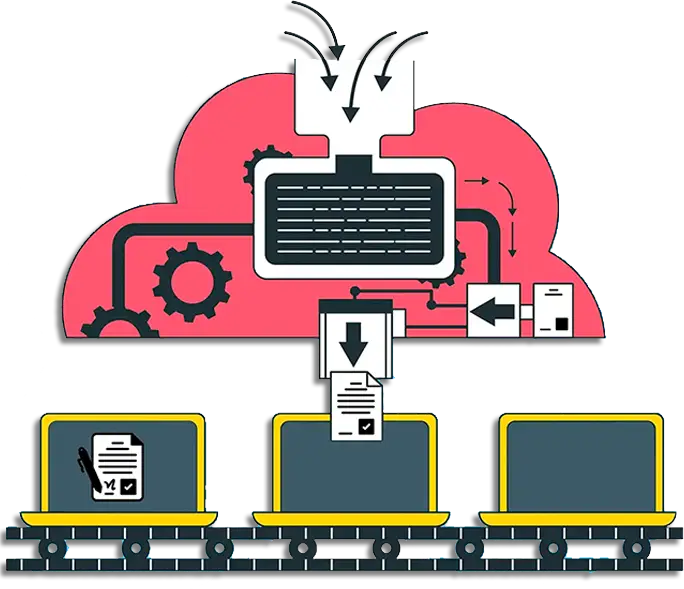
Automatic contract generation is the key to business efficiency!

Gathering required information

Merging information into an existing template

Error checking and styling
- World Commerce and Contracting – contract automation can save up to 75% of the time spent on contracting tasks.
- Deloitte – businesses lower their contract management costs by 60% when they use contract management tools.
Join the ever-growing community of businesses around the world
that are transforming their manual contract creation into a productivity engine for their business
Our contract management experts will save you days of hard work
looking for the best contract management solution

research existing solutions and decide which ones to evaluate
Do it yourself:
1-3 days depending on how many solutions are considered and how in-depth each solution research is.
Partner with Documami:
Less than 1 day based on your specific requirements

Evaluate multiple solutions
for comparison
Do it yourself:
commonly 2-4 days to test each solution, depending on the complexity of your test scenario
Partner with Documami:
A few hours per solution as we are already familiar with most document automation and management tools and interfaces

Selecting a solution and configuring it for full business use
Do it yourself:
usually up to 5 days depending on how complex your environment is
Partner with Documami:
As little as 24 hours
Let the contract automation experts at Documami focus on transforming your business with contract management services
so you can focus on strategic tasks that are important for your business.
Add automation to your contracting
in 3 simple steps

Product consultation
We'll understand your requirements and provide you with a short list of contract management software that best match your needs, from features to budget.

Solution Evaluation
We'll build a test scenario based on your needs and test it for you with your selected solutions. Once complete, we'll give you a full review of the pros and cons of each solution along with suggested solutions we think will benefit your business most.

End to End Configuration
Our contract management expert will set up the solution of your choice from top to bottom, making sure all details are covered and you are happy with the result.
Supercharge your contract automation services review process

Anywhere+Anytime
We can provide our services remotely with little to no impact on your business. Our experts are available 24/7 to ensure we accommodate your every need.

Tailored templates
Our experts will create custom made contract templates and information collection forms tailored to your specific needs saving you the time and effort of using complex design tools or limited predesigned templates.

Security at its best
From zero data stored to top-of-the-line encryption and access controls, we'll make sure your data is protected with state-of-the-art security measures, ensuring confidentiality and compliance.
Ready to take your contract creation to the next level?
Frequently Asked Questions
Contract automation refers to the use of technology, such as software and artificial intelligence, to streamline and improve the process of creating, managing, and analyzing contracts. This technology typically involves the use of templates, predefined clauses, and workflow automation to expedite contract creation and ensure compliance with legal and regulatory requirements.
Contract automation can involve various stages of the contract lifecycle, including drafting, negotiation, approval, execution, and post-execution management. By automating repetitive tasks and standardizing processes, contract automation can help organizations save time, reduce errors, minimize risks, and increase efficiency in managing their contracts. Additionally, it can provide better insights into contract performance and obligations through data analysis and reporting functionalities.
There are several reasons why organizations use contract automation:
Efficiency: Contract automation streamlines the contract lifecycle by automating repetitive tasks, reducing manual intervention, and accelerating the drafting and approval process. This efficiency saves time and resources for both legal and business teams.
Accuracy: By using predefined templates, standardized clauses, and error-checking mechanisms, contract automation minimizes the risk of human errors and inconsistencies in contracts, leading to more accurate and reliable agreements.
Compliance: Contract automation helps ensure that contracts comply with legal and regulatory requirements by incorporating relevant clauses, terms, and conditions. It also enables organizations to stay up-to-date with changes in laws and regulations by easily updating contract templates.
Risk Management: Automated contract management systems provide better visibility into contract terms, obligations, and deadlines, enabling organizations to proactively identify and mitigate risks such as non-compliance, disputes, or missed deadlines.
Cost Savings: By reducing the time and effort required to create, manage, and analyze contracts, contract automation can result in cost savings for organizations. It eliminates the need for manual data entry, reduces reliance on legal professionals for routine tasks, and minimizes the risk of costly errors or disputes.
Improved Collaboration: Contract automation platforms often include collaboration features that facilitate communication and collaboration among stakeholders involved in the contract lifecycle, such as legal, procurement, sales, and finance teams.
Insights and Reporting: Contract automation systems generate valuable insights and reports on contract performance, key metrics, and obligations. This data can help organizations make informed decisions, optimize contract terms, and identify opportunities for improvement.
Overall, contract automation offers numerous benefits that enhance efficiency, accuracy, compliance, risk management, and cost-effectiveness in managing contracts, making it an essential tool for modern businesses.
Whether you need a contract automation expert depends on several factors, including the complexity and volume of your contract management needs, your organization’s resources, and your level of expertise in contract automation technology. Here are some considerations to help you decide:
Complexity of Contracts: If your organization deals with a high volume of complex contracts with diverse requirements, such as legal agreements, procurement contracts, or vendor agreements, it may be beneficial to engage a contract automation expert who can design and implement tailored solutions to meet your specific needs.
Legal and Regulatory Compliance: If your contracts need to comply with specific legal and regulatory requirements in different jurisdictions or industries, a contract automation expert with expertise in contract law and regulatory compliance can ensure that your automated contracts meet all necessary standards.
Technology Integration: Implementing contract automation often involves integrating software platforms, databases, and other systems. A contract automation expert can help you select and integrate the right technology solutions to optimize your contract management processes seamlessly.
Customization and Optimization: Contract automation experts can customize automation workflows, templates, and processes to align with your organization’s unique requirements and preferences. They can also provide ongoing support and optimization to ensure that your contract automation system continues to meet your evolving needs.
Training and Support: If your organization lacks internal expertise in contract automation technology, a contract automation expert can provide training and support to help your team effectively utilize the automation tools and maximize their benefits.
Cost Considerations: While hiring a contract automation expert may involve upfront costs, the expertise they bring can result in long-term cost savings through improved efficiency, accuracy, and risk management in contract management processes.
Ultimately, the decision to engage a contract automation expert depends on your organization’s specific needs, resources, and strategic priorities. If you’re unsure whether you need an expert, you can start by assessing your current contract management processes and identifying areas where automation could provide the most significant benefits. From there, you can determine whether external expertise would be beneficial in achieving your contract management goals.
Contract lifecycle management (CLM) refers to the process of managing contracts from initiation through execution to expiration or renewal. It encompasses all stages of a contract’s existence, including drafting, negotiation, approval, execution, performance, and analysis. CLM involves various activities and stakeholders across an organization, including legal, procurement, sales, finance, and operations teams.
The key stages of the contract lifecycle typically include:
1. Initiation: The contract lifecycle begins with the identification of a need for a contract, such as a business opportunity, procurement requirement, or partnership arrangement. During this stage, stakeholders outline the objectives, scope, and requirements of the contract.
2. Drafting and Negotiation: Contracts are drafted based on the agreed-upon terms and conditions, incorporating legal, regulatory, and business requirements. Negotiation may occur between parties to finalize the terms of the contract, addressing any discrepancies or areas of disagreement.
3. Approval: Once the contract terms are negotiated, they undergo internal approval processes within the organization to ensure compliance with company policies and guidelines. Approval may involve legal review, financial analysis, and endorsement by relevant stakeholders.
4. Execution: Contracts are formally signed and executed by the parties involved, establishing legal obligations and commitments. Execution may involve physical or electronic signatures, depending on the parties’ preferences and the applicable legal framework.
5. Performance and Monitoring: Throughout the contract term, parties monitor and manage contract performance to ensure compliance with agreed-upon obligations, deadlines, and milestones. This stage may involve tracking deliverables, monitoring performance metrics, and addressing any issues or deviations from the contract terms.
6. Amendment and Renewal: As business needs evolve or circumstances change, contracts may require amendments or renewals to reflect updated terms or extend the contract duration. This stage involves renegotiating terms, obtaining approvals, and executing the amended or renewed contract.
7. Expiration or Termination: Contracts reach their end-of-life either upon expiration of the contract term or through early termination by mutual agreement or due to breach of contract. This stage involves completing any remaining obligations, conducting final assessments, and formally closing out the contract.
8. Analysis and Lessons Learned: After a contract is concluded, organizations may conduct post-mortem reviews to evaluate contract performance, identify lessons learned, and gather insights for future contract management processes. This analysis informs continuous improvement efforts in contract lifecycle management.
Effective contract lifecycle management requires robust processes, clear communication, collaboration among stakeholders, and the use of technology solutions such as contract management software to streamline and optimize contract management activities. By managing contracts systematically throughout their lifecycle, organizations can mitigate risks, ensure compliance, optimize performance, and maximize the value derived from their contractual relationships.